
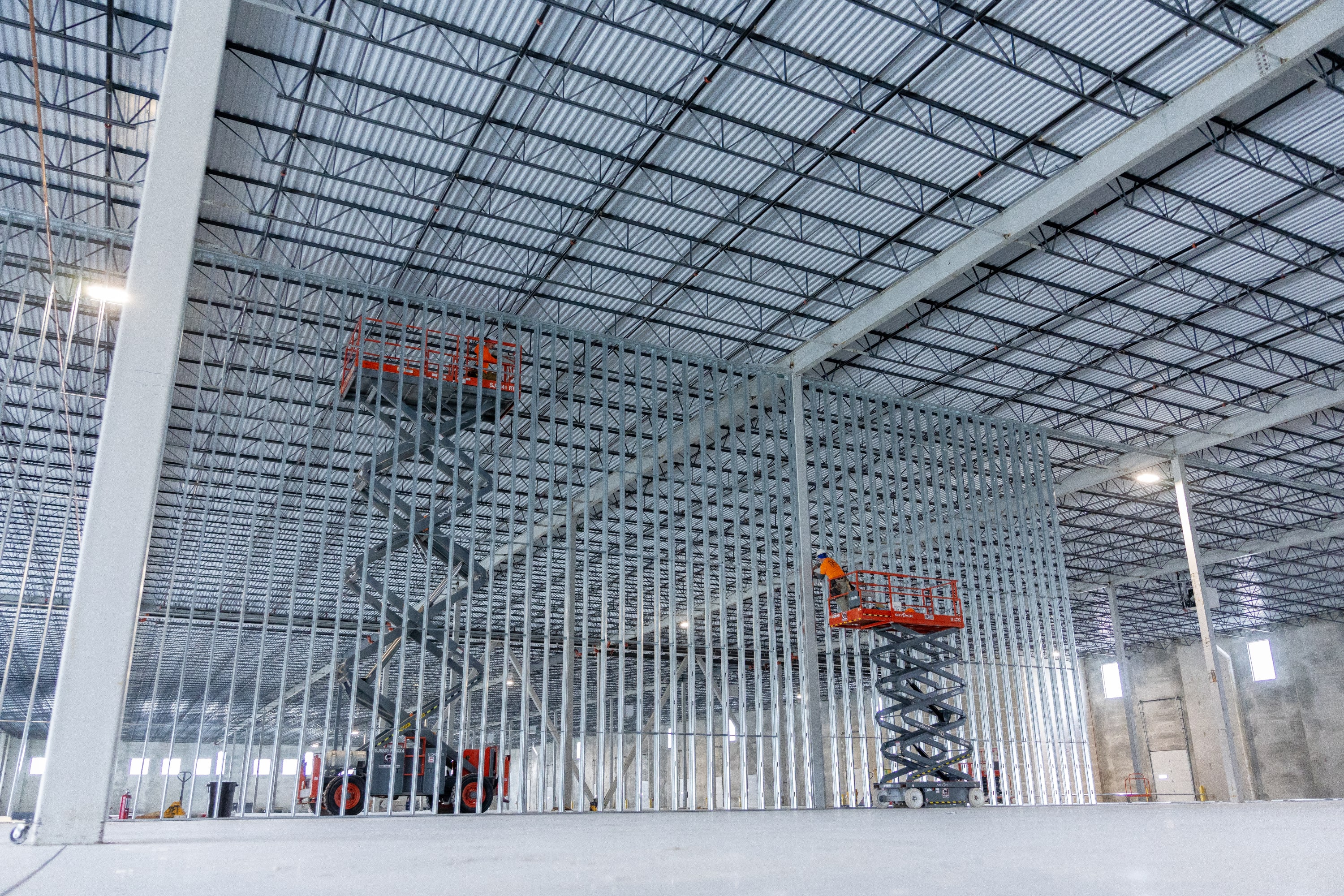
When you're planning a commercial or industrial building, the materials behind the finished walls matter just as much as the finishes everyone eventually sees.
Framing affects the stability of walls, installation of mechanical and electrical systems, fire-rated assemblies, construction timelines, finished surfaces, and ultimately how well a building upholds over time.
That's one reason metal stud framing is such a common choice across commercial and industrial construction.
From offices, schools, and healthcare facilities to manufacturing plants, warehouses, and production spaces, cold-formed steel framing can be used for a wide variety of wall systems.
But why choose it?
The answer goes beyond strength. Metal framing offers several practical advantages during construction and throughout the life of a building.
One of the biggest advantages of metal stud framing is dimensional stability.
Wood is a natural material, meaning individual pieces can behave differently as environmental conditions change. Moisture can contribute to shrinking, swelling, twisting, bowing, or warping.
Cold-formed steel is manufactured to consistent dimensions and doesn't change size because of changes in moisture content. That makes it easier to create straight walls, accurate layouts, and predictable assemblies.
That consistency matters beyond the framing stage. Framing creates the foundation for the drywall and finishes installed over it, so a straight, stable wall can help reduce alignment issues that may otherwise become visible later.
Metal studs can also be manufactured and ordered in project-appropriate lengths. Combined with their relatively light weight and uniformity, this can help with:
Those efficiencies become especially valuable when you're talking about hundreds (or thousands) of feet of wall across a large commercial or industrial project.
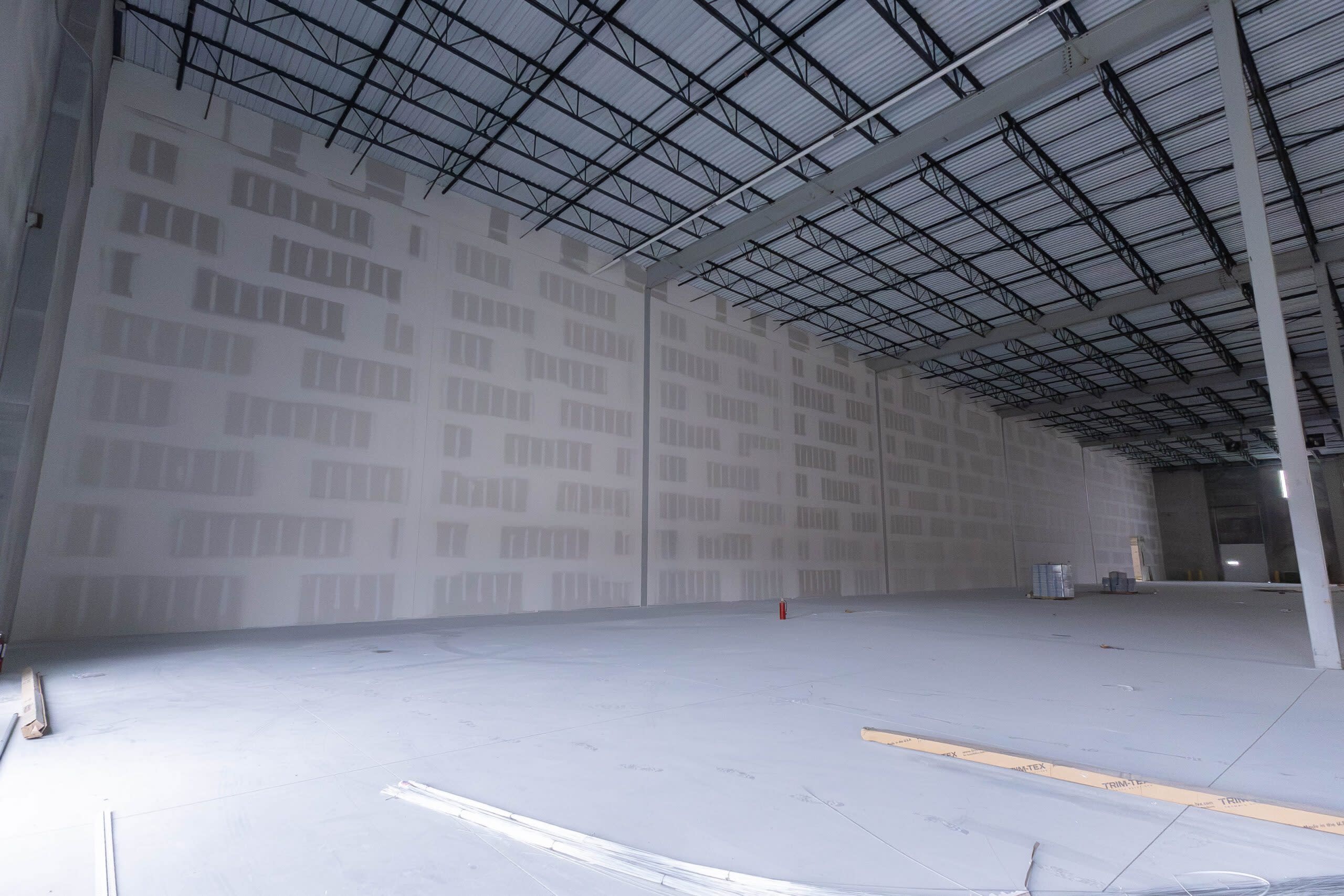
Fire performance is an important consideration in commercial and industrial construction, and steel offers one straightforward advantage: it doesn't serve as fuel for a fire.
Cold-formed steel framing is classified as a noncombustible material.
That doesn't mean a metal stud wall is automatically "fireproof." The fire-resistance rating of a wall or ceiling depends on the entire tested assembly, including the framing, gypsum panels, insulation, fasteners, spacing, and construction details.
When metal framing is combined with the appropriate materials and installed according to a tested assembly, these systems can be designed to meet specific fire-resistance requirements.
This can be especially important for rated corridors, stairwells, tenant separations, mechanical and electrical rooms, equipment rooms, shaft walls, storage areas, and other spaces requiring specific fire-rated assemblies.
The structure behind your walls isn't something you want to think about after construction is complete.
Metal studs don't provide a food source for termites or other insects, steel itself doesn't support mold growth, and it doesn't absorb moisture like wood.
That can make metal framing particularly attractive for building owners and facility managers thinking beyond opening day and considering the long-term durability of their investment.
Proper design still matters. Steel components need appropriate corrosion protection for their intended environment, particularly in industrial spaces where moisture, chemicals, or other conditions may be present.
When the appropriate framing system is selected for the environment, cold-formed steel provides a durable foundation designed for a long service life.
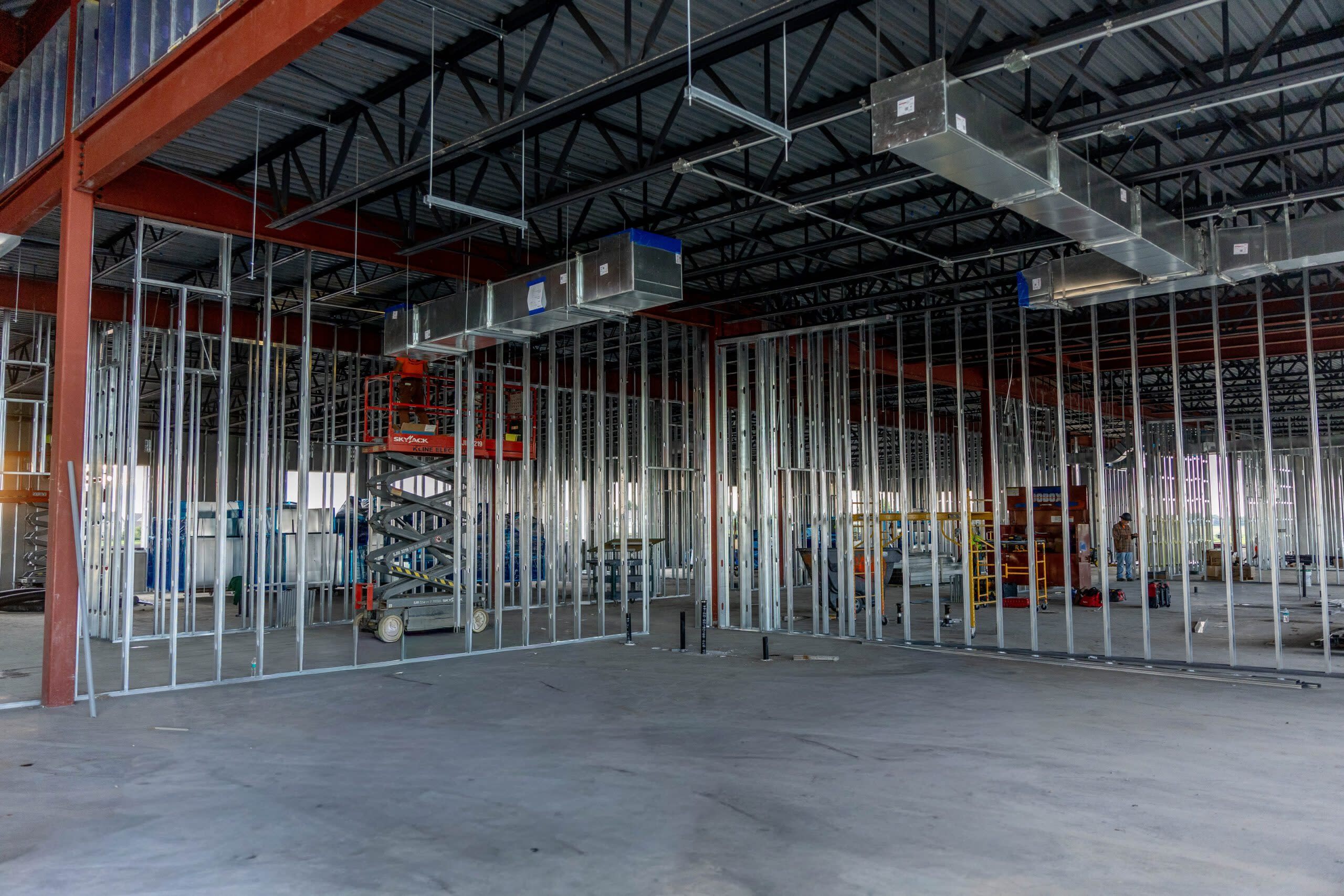
Cold-formed steel has a high strength-to-weight ratio, allowing metal framing to provide strength without requiring the weight associated with many other construction materials.
But not every wall needs to do the same job.
A non-load-bearing office partition has very different requirements from a tall wall in a manufacturing facility or an exterior structural wall. Metal framing is available in different sizes, thicknesses, configurations, and strengths so the system can be selected based on what the wall actually needs to accomplish.
That versatility allows metal framing to be used for applications such as:
This flexibility can also be valuable throughout the life of a building. Commercial spaces change tenants, warehouses add offices, manufacturers reconfigure production areas, and facilities expand as operations grow.
Choosing adaptable building systems can make it easier to plan around both current and future needs.
A finished wall may look simple from the outside. What's happening behind it usually isn't.
Commercial and industrial walls may need to accommodate electrical wiring, data cabling, plumbing, insulation, blocking, firestopping, and other mechanical and electrical systems. Metal studs are commonly manufactured with pre-punched openings that can help accommodate some of these components when the wall system is properly planned.
That's especially useful in industrial facilities.
Manufacturing plants, warehouses, processing facilities, and production spaces often need to work around equipment, extensive mechanical and electrical systems, tall walls, fire-rated separations, and changing operational needs.
Depending on the specified assembly, metal framing can be used for everything from offices built within a manufacturing facility to equipment rooms, corridors, storage areas, shaft walls, exterior wall systems, and specialized separations.
In environments where multiple trades and building systems have to work together, a well-planned framing system can make coordination easier from the beginning.
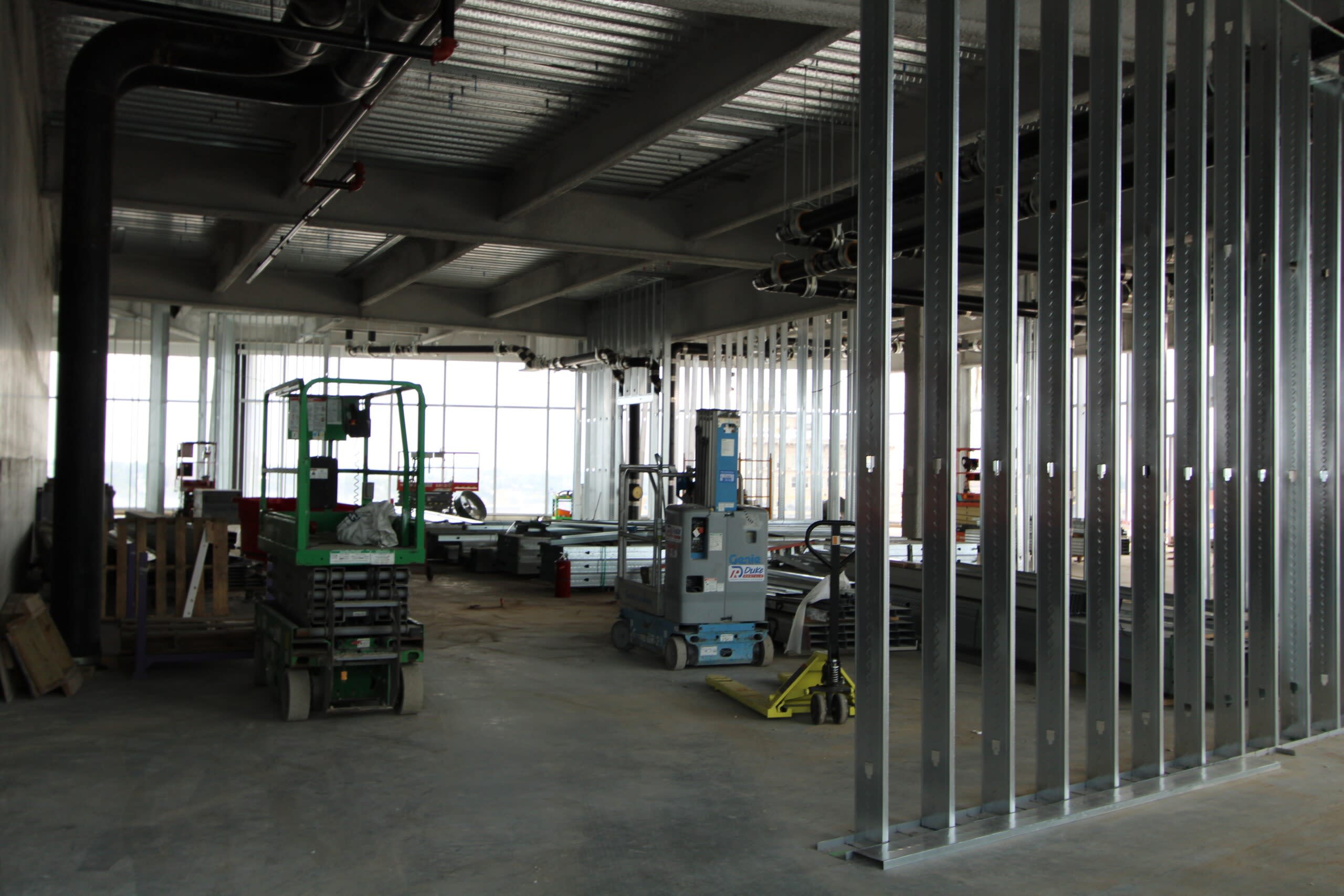
When comparing framing materials, looking only at the initial price doesn't tell the whole story.
A better question is:
What will this framing system cost to install, finish, maintain, and live with over the life of the building?
A framing system that offers consistent dimensions, efficient installation, durability, reduced waste, and flexibility can provide value well beyond the initial material purchase.
When evaluating framing options, it's worth considering the entire project:
The lowest material price doesn't necessarily equal the best long-term value.
Not necessarily. Every building has different structural requirements, environmental conditions, budgets, schedules, and performance goals.
Lighter-gauge studs may be appropriate for non-load-bearing interior partitions, while heavier-gauge framing can be specified for structural, exterior, or more demanding applications. Stud size, spacing, wall height, deflection requirements, lateral loads, finishes, and environmental conditions all play a role in determining the appropriate system.
That's why framing should be selected based on what the building actually needs rather than simply choosing a material because it's familiar.
Most people will never see the framing inside a finished commercial or industrial building. They'll see the painted walls, ceilings, doors, equipment, offices, and everything else that turns a construction project into a working space.
But the performance of those finished spaces starts with what's behind them.
Metal stud framing provides a precise, durable, noncombustible, and versatile foundation for a wide range of commercial and industrial wall systems.
Whether you're constructing a new facility, renovating an existing space, expanding operations, or planning for future growth, it's worth thinking beyond what holds the drywall up today.
It's about building walls that are designed to keep performing tomorrow.
JC Toland provides metal stud framing for commercial and industrial construction throughout Iowa and the greater Midwest.
Our capabilities include lighter-gauge framing for non-load-bearing applications such as interior partitions and office build-outs, as well as heavier-gauge framing for structural and more demanding applications where specified.
Because our capabilities extend beyond framing into drywall, painting, coatings, and additional commercial and industrial finishes, our crews understand how the framing stage affects the work that follows.
Planning a commercial or industrial project? Contact JC Toland to discuss your project's framing and finishing needs.
Media Contact : Camber Ostwinkle
Related Links : https://www.jctoland.com/
Source : https://www.jctoland.com/blog/benefits-of-metal-stud-framing/